

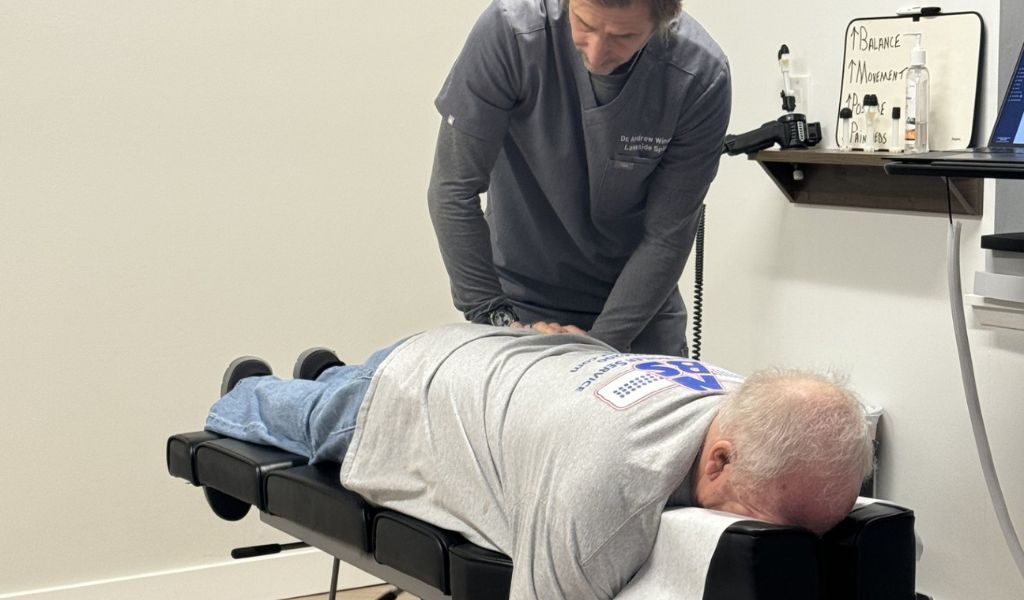
Standing up from a chair takes a little longer than it used to. Turning to check your blind spot while driving feels stiff. Getting down to the floor to play with grandchildren sounds like an event you need to prepare for.
These aren’t just the inevitable signs of getting older. For most adults, these limitations are the result of years of accumulated joint restrictions, unresolved injuries, postural strain, and nervous system changes all of which are correctable with the right care.
At Lakeside Spine and Wellness in Renton, WA, Dr. Andrew M. Winger, D.C. has spent decades helping adults move better, hurt less, and stay active well into their later years. In this post, we’ll explain exactly why mobility declines with age, how chiropractic adjustments address the root causes, not just the symptoms and what a realistic plan for staying mobile actually looks like.
Why Mobility Declines With Age (And Why It’s Not Inevitable)
Most people assume stiffness and limited movement are simply part of getting older. The truth is more nuanced and more hopeful.
Mobility decline happens for several specific, identifiable reasons that compound over decades:
Joint degeneration and osteoarthritis. Years of wear and tear on the cartilage in your spine, hips, and knees leads to inflammation, stiffness, and reduced range of motion. But how quickly this happens and how much it limits you, is shaped heavily by how well your joints stay aligned and how efficiently your body moves.
Spinal misalignments. When the vertebrae in your spine shift out of their optimal position, they create uneven pressure on discs, joints, and the surrounding soft tissue. Over time, these misalignments called subluxations restrict movement and interfere with how well your nervous system communicates with the rest of your body.
Reduced flexibility. Ligaments and tendons gradually lose elasticity, making everyday movements feel tighter. Prolonged sitting and sedentary habits accelerate this process significantly.
Muscle weakness and imbalance. Muscle mass decreases by roughly 3–5% per decade after age 30, accelerating after 60. This loss, known as sarcopenia, creates imbalances that pull the skeleton out of alignment and make simple activities feel effortful. Our CentriForce™ training programme specifically addresses core strength deficits that undermine posture and daily movement.
Nervous system changes. The nervous system’s ability to relay signals efficiently slows with age, affecting coordination, reflexes, and proprioception — your body’s awareness of where it is in space. This is one of the core reasons older adults are at higher risk of falls.
Accumulated compensation patterns. An old ankle sprain. A car accident at 38. Years of sitting at a desk with rounded shoulders. Every unresolved injury and habitual posture pattern creates compensations — small movement alterations your body makes to avoid pain. Over decades, these compensations become ingrained and generate their own pain, stiffness, and degeneration.
The important takeaway: most of what people attribute to “just getting older” is actually the result of correctable dysfunction. Your chronological age matters far less than how well your body actually functions.
How Chiropractic Adjustments Address the Root Causes of Mobility Loss
Chiropractic care works by restoring proper alignment to the spine and joints, removing interference from the nervous system, and giving your body the structural foundation it needs to move freely and heal efficiently.
Here is what that looks like in practice:
Restoring Spinal Alignment
Chiropractic adjustments precise, controlled force applied to specific joints, correct the misalignments that restrict movement and create chronic pain. When the spine moves into better alignment, pressure lifts off compressed nerves and discs, joints move more freely, and the surrounding muscles no longer have to work overtime to hold your body upright against a crooked structure.
At Lakeside Spine and Wellness, Dr. Winger combines traditional chiropractic adjustments with Chiropractic Biophysics (CBP) one of the most research-supported corrective chiropractic methods in the field. CBP focuses on achieving measurable, lasting changes in spinal alignment rather than simply providing temporary symptom relief.
Improving Range of Motion
Restricted joints don’t just hurt, they change how you move. When one joint can’t move properly, neighbouring joints compensate by working harder, accelerating their own wear. Regular adjustments restore normal joint mechanics, which progressively improves range of motion throughout the spine and into the extremities.
Patients often notice they can rotate their neck more fully, bend and straighten more easily, and move with less effort within just a few weeks of beginning care.
Reducing Chronic Pain
Chiropractic adjustments address the structural causes of chronic pain disc pressure, joint inflammation, nerve irritation rather than masking it with medication. This makes chiropractic care particularly valuable for aging adults managing conditions like:
- Osteoarthritis in the spine, hips, or knees
- Sciatica and disc-related pain
- Chronic neck stiffness and neck pain
- Radiating pain, numbness, or tingling into the arms or legs
For disc-related compression specifically, we also offer spinal decompression therapy, a gentle, non-surgical approach that reduces disc pressure and supports healing.
Improving Balance and Reducing Fall Risk
Falls are one of the most serious health risks for adults over 65. Chiropractic care addresses several of the key factors that contribute to falls: poor proprioception, reduced coordination, and postural instability. When the nervous system receives clearer signals from a well-aligned spine, balance and spatial awareness improve often significantly.
We pair adjustments with our PostureZone programme and motor control training to reinforce steadier movement and build the balance patterns that carry over into daily life.
Supporting Joint Health Long-Term
Proper spinal alignment reduces the uneven loading that accelerates joint degeneration. This means chiropractic care isn’t just about how you feel today, it’s a proactive investment in how your joints hold up over the next decade. Maintaining better mechanics now significantly slows the progression of age-related joint changes like osteoarthritis.
What Mobility Loss Actually Costs You
Limited mobility has consequences that go well beyond physical discomfort. Research consistently links declining mobility in older adults to:
- Increased fall risk and injury
- Loss of independence in daily activities
- Social withdrawal and isolation
- Accelerated cognitive decline
- A shorter period of healthy, active living, what researchers call the “healthspan”
The gap between your healthspan and lifespan determines your quality of life in later years. Staying mobile keeps you actively engaged travelling, gardening, playing with grandchildren, pursuing hobbies, rather than progressively dependent on others for basic tasks. Our Wellness Care programme is built around this philosophy: care designed not just to reduce pain today but to support a longer, more active life.
What to Expect From Chiropractic Care for Mobility
Every patient at Lakeside Spine and Wellness begins with a thorough evaluation. Dr. Winger doesn’t start with a generic plan, he starts with your specific findings. That means assessing your alignment, movement quality, neurological function, balance, and stability before making any recommendations.
A typical care plan for an aging adult focused on mobility might include:
Chiropractic adjustments the foundation of care, restoring alignment and joint function visit by visit.
Corrective exercises and rehab guided movement work to reinforce what adjustments restore. Our exercise library supports patients between visits so progress compounds over time.
Postural correction through our CBP-based mirror image posture correction and spinal molding approach, we work toward lasting structural changes rather than recurring short-term relief.
CentriForce™ training core strength and stability training that supports the spine and helps your body maintain the improvements gained through adjustments.
Spinal decompression for patients with disc involvement, radiating pain, or nerve compression symptoms, decompression therapy complements adjustments to speed recovery.
Nutrition guidance inflammation plays a significant role in joint pain and tissue recovery. Dr. Winger incorporates practical nutrition support to reduce systemic inflammation and support better healing from within.
Signs You Should Schedule a Mobility Assessment
You don’t have to be in severe pain to benefit from chiropractic care. Many of the patients who see the most dramatic improvements in mobility come in with what they describe as “just stiffness” or “normal aging.” Consider booking an evaluation if you notice:
- Morning stiffness that takes more than 15–20 minutes to ease
- Difficulty turning your head fully when driving
- A feeling that your balance isn’t as reliable as it used to be
- Pain or discomfort that limits activities you enjoy
- A recent fall or a growing fear of falling
- Headaches or migraines that have become more frequent
- Numbness, tingling, or weakness in your arms or legs
If any of these resonate, a complimentary consultation with Dr. Winger is the logical first step. There’s no pressure or obligation, just an honest conversation about what’s contributing to your limitations and whether our approach is the right fit.
Why Patients in Renton Choose Lakeside Spine and Wellness
Dr. Andrew M. Winger, D.C. holds a B.S. in Biology and Pre-Med from Washington State University and his Doctor of Chiropractic degree from Life University, graduating with honours. He is certified in Chiropractic Biophysics and has helped more than 10,000 patients restore function, reduce pain, and reclaim the movement they thought they’d lost.
What sets Lakeside apart is the commitment to findings-based care. We test before we treat, explain what we find, and build a structured plan around your specific goals. No guesswork, no generic protocols.
Book Your Mobility Assessment in Renton, WA
If stiffness, joint pain, or limited movement are holding you back, now is the right time to find out what’s actually causing it and what can be done about it.
Claim our New Patient Special a $59 consultation, case review, and comprehensive examination including a corrective adjustment based on your findings, plus a full report of findings so you know exactly where you stand.
Call us at 425-276-8044 or request your appointment online today.
You don’t have to accept decline as the price of aging. With the right care and a clear plan, staying mobile, strong, and independent is within reach at any age.
Frequently Asked Questions
Can chiropractic adjustments help seniors with osteoarthritis?
Yes. Chiropractic care doesn’t reverse cartilage damage, but it does reduce the joint inflammation and mechanical stress that make arthritis symptoms worse. Regular adjustments help preserve range of motion and manage pain without medication, making daily activities significantly more comfortable.
Is chiropractic care safe for older adults?
Chiropractic care is widely recognised as safe and effective for older patients. Dr. Winger tailors every adjustment to the patient’s age, bone density, health history, and specific findings. Gentler techniques are available for patients who require them including instrument-assisted adjustments and low-force methods.
How quickly will I notice improvements in mobility?
Many patients notice improvements in their range of motion and comfort within the first few weeks of care. Longer-standing restrictions and structural changes take more time to correct, but the vast majority of patients see meaningful, measurable progress within the first month of consistent care.
Do I need a referral to see a chiropractor in Renton, WA?
No referral is needed. You can contact Lakeside Spine and Wellness directly to schedule a consultation at any time.
Does chiropractic care replace physical therapy?
Chiropractic care and physical therapy complement each other well. At Lakeside Spine and Wellness, Dr. Winger integrates rehabilitative exercise, movement coaching, and corrective strategies directly into your care plan — so the structural gains from adjustments are reinforced by the strength and movement patterns needed to hold them.
What if I have a herniated disc or sciatica — is chiropractic still appropriate?
Yes. Disc injuries and sciatica are among the most common conditions we treat. Our spinal decompression therapy is specifically designed for disc-related compression. We’ll assess your case thoroughly before making any recommendations and will always outline what we do and do not treat.